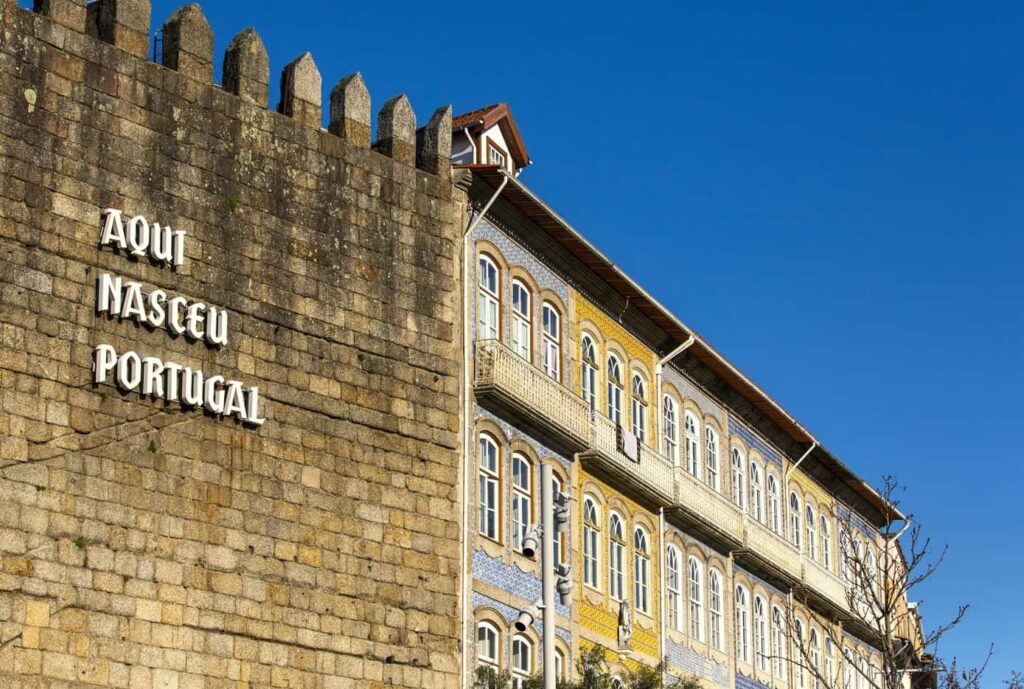
As our Portuguese friends are the first to admit, their beautiful language is notoriously difficult for English speakers to learn.
Portuguese people also love to speak quickly – throw in a strong regional accent where consonants vanish and three words morph into one, and all hope is gone. ‘Standard’ pronunciations are complex enough: ‘o’ at the end of the word becomes ‘ooh’ – ‘ã’ and ‘õ’ are nasal and tricky to master – ‘n’ and ‘m’ could be nasal when they follow a vowel, and sometimes they almost vanish altogether when ‘Belem’ becomes ‘Belhng’.

Don’t worry: as a nation, the Portuguese are some of the most welcoming and aimable people you’re ever likely to meet. Respectfully learning a few words and phrases will be greatly appreciated, and when you’re recognised as a visitor you’ll often find people kindly slipping into speaking English.
The basics
Sim (seem) – yes.
Não (now) – no.
Por favor (pour fah vor) – please.
Obrigada/obrigado (ob bri gar da/ob bri gar doo) – thank you. Women say obrigada and men say obrigado.
De nada (deh nah dah) – you’re welcome.
Desculpe (desh kul per) – excuse me. When you’re apologising.
Com licença (kom lee sen sa) – excuse me. When you’re trying to get someone’s attention.
Days of the week
Domingo (do ming goo) – Sunday.
Segunda-feira (she gunda fay rah) – Monday.
Terça-feira (ter sa fay rah) – Tuesday.
Quarta-feira (qwar ta fay rah) – Wednesday.
Quinta-feira (kin tah fay rah) – Thursday.
Sexta-feira (sech tah Fay rah) – Friday.
Sábado (she bah doo) – Saturday.
Numbers
Um (oom) – one.
Dois (doh ush) – two.
Três (the sh) – three.
Quatro (kua tru) – four.
Cinco (syn coo) – five.
Seis (seh ish) – six.
Sete (set) – seven.
Oito (oy teh) – eight.
Nove (noh ve) – nine.
Dez (desh) – ten.
Onze (on zeh) – eleven.
Doze (doh ze) – twelve.
Treze (tre zeh) – thirteen.
Catorze (ca tor zeh) – fourteen.
Quinze (kin zeh) – fifteen.
Dezasseis (deh zi see seh) – sixteen.
Dezassete (deh zi set) – seventeen.
Dezoito (deh zoy teh) – eighteen.
Dezanove (deh noh ve) – nineteen.
Vinte (vin teh) – twenty.

Greetings
Bom dia (bom dee ah) – good morning. Before noon.
Boa tarde (bow ah tar deh) – good afternoon. From noon to roughly 6pm.
Boa noite (bow ah noy teh) – good night. From 6pm until the wee hours.
Olá (oh la) – an informal hello. Perhaps more common in the south/Algarve and on Madeira.
Tchau (chow) – an informal goodbye. Often repeated: Tchau-tchau.
Adeus (ah deh oosh) – goodbye. Not so common in the Azores
Até logo (ah tah log) – an informal ‘until later’. Often abbreviated to ‘tah log’.
Até ja (ah tay zhah) – closer to ‘see you in a bit’, usually meant literally. Often abbreviated to ‘tay zhah’.
Como está ? (com oh esh tah) – a more formal how are you?
Tudo bem? (too doh bye) – an informal how are you.
Eu estou bem. E tú? ( ay oh esh too bye. Eh too) – I’m good. And you? It’s also okay to say ‘Bem. E tu?
Qual é o seu nome? (qwal eh so nom er) – what is your name? The ‘o’ in the middle is pretty much silent.
Meu nome é… (May nom er eh…) – my name is…
Muito prazer (moo toe pra zeh) nice to meet you. Often abbreviated to a simple prazer.
Você fala Inglês? (voh seh fah lah in glayz) – do you speak English?Often abbreviated to ‘fah lah in glayz’.
Não falo português (now fah loo por too gaysh) – I don’t speak Portuguese.
Desculpe, eu não entendo (desh kul per, eh oh now en ten doo) – apologies, I don’t understand.
Directions
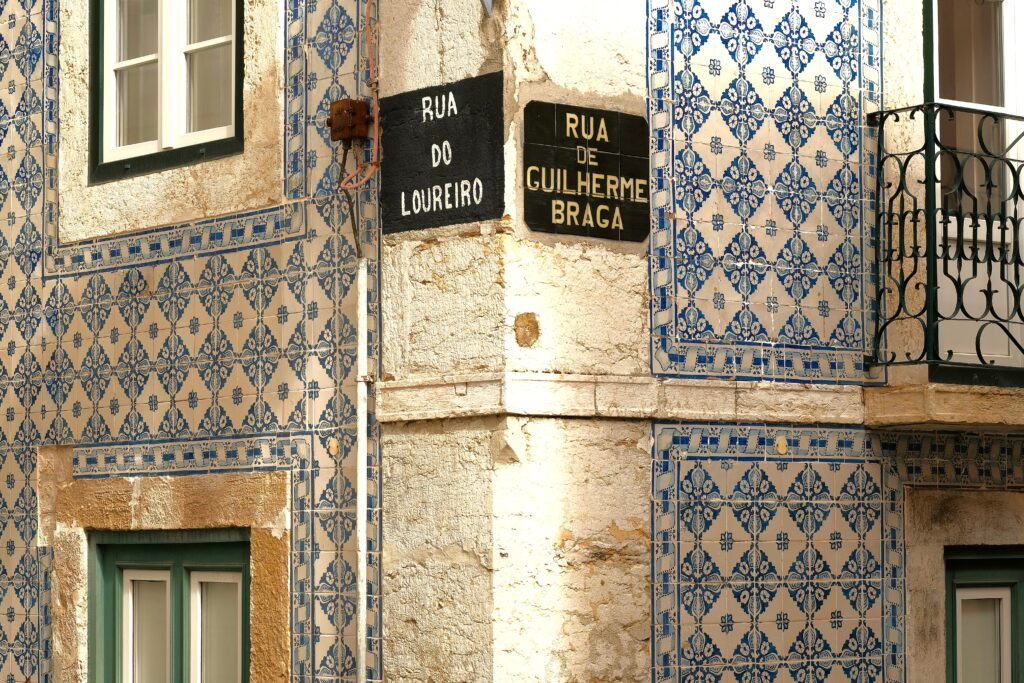
Onde fica… (on deh fee kah…) – where is …
Onde está…(on deh esh tah…) – where is…
…a casa de banho? (ah casa der ban hoo) – …the bathroom?
…a estação? (ah eshta sow) – …the train station?
…de compoio? (deh com boy ooh) – …the train?
…o Metro? (oh meh true) – …the metro?
…a parada de autocarro? (ah pah rada deh ow toe cah roo) – …the bus stop?
…o ponto de taxi? (oh pon toe deh taxi)…the taxi stand?
…o estacionamento? (oh eshta see oh nah -men too) – …the car park?
…o aeroporto? (ah air roo por toe) – …the airport?
…o banco? (ban coo) – …the bank?
…o multibanco? (multi ban coo) – …the cash machine/ATM?
À esquerda (ah esh kair dah) – left.
À direita (ah dee ray tah) – right.
Em frente (eh fren teh) – straight ahead.
A primeira rua…(ah preem air rah roo ah) – the first street…
A segunda rua… (ah she goon dah roo ah) -the second street…
A terceira rua…(ah tay sarah roo ah) – the third street…
Eating out
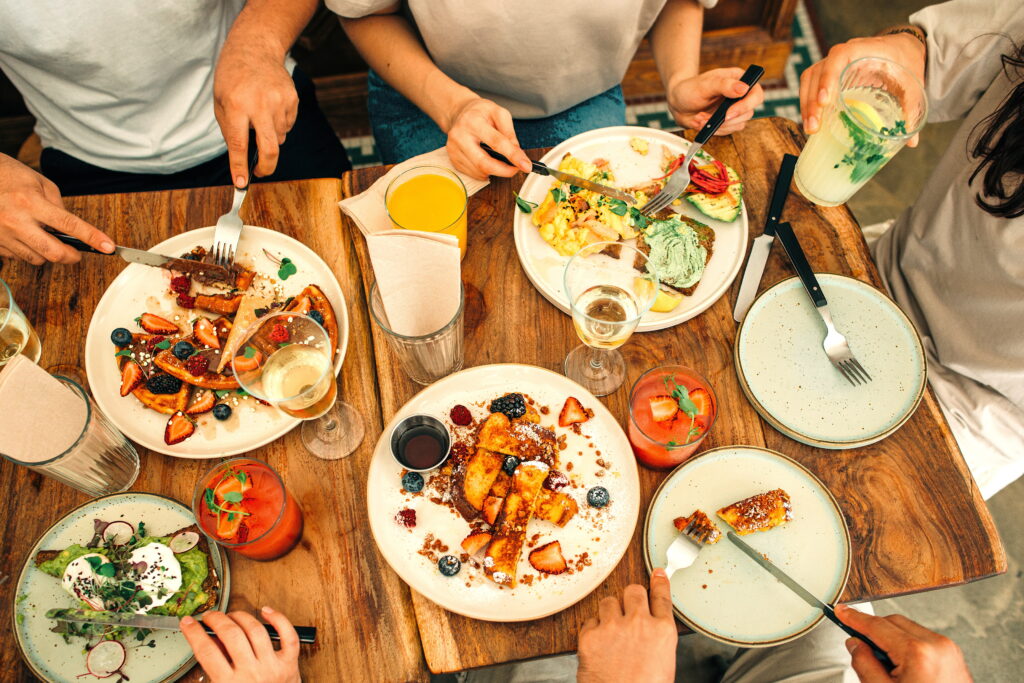
O pequeno-almoço (oh peh kee noo al moh soo) – breakfast.
Café da manhã (café ah man ah) – breakfast. Brazilian Portuguese.
Almoço (al moh soo) – lunch.
Jantar (jhan tar) – dinner.
Eu gostaria uma mesa para duas pessoas (ay oh gosh dah ree ah ooma mess ah doo ash pe zoh ash – I would like a table for two.
Eu tenho uma reserva (ay oh ten ooh ooma rez erv ah) – I have a reservation.
Eu tenho uma reserva em nome de…(ay oh ten ooh ooma rez erv ah em nom eh der) – I have a reservation in the name of…
Queria ver o menu, por favor (keh ree ah veh meh noo)- I would like to see the menu, please.
Entrada (en trah dah) – starter.
Prato principal (Prah toe preen see pahl)) – main course.
Sobremesa (soh beh meh zah) – dessert.
Pratos de carne (prah tosh deh car neh) – meat dishes.
Pratos de peixe (prah tosh deh pesh) – fish dishes.
Pratos do dia (prah tosh doo dee ah) – today’s specials.
Bebida (beh bee dah) – drinks.
….garrafa de água (gah raff ah deh ag wa) – bottle of water.
…copo de água (co poo deh ag wa) – glass of water.
…água com gás (ag wa com gaz) – sparkling water.
Vinho tinto (veen ooh tin too) – red wine.
Vinho branco (veen ooh bran koo) – white wine.
Cerveja (sher vay zhar) – beer. Beet measures have names which often vary from region to region…if in doubt, go with size…
Pequeno (peh keen ooh) – small.
Media/Medio (mee dia/mee dio) – medium. Feminine/masculine.
Grande (gran der) – large.
Saúde! (sah ooh deh) – cheers.
Eu gostaria…(ay oh gosh dah ree ah) – I would like…
Para mim…(para meem) – for me…
…sopa da dia (soh pa dah dee ah) – …soup of the day.
…salada (sal ah dah) – …salad.
…batata frita (bah tah tah free tah) – …french fries.
…Bacalhau à Brás (oom bah kah lyow) – a classic Portuguese salt cod dish.
…bife regional (bee feh ree zhon el) – beef steak, in the local style.
…francesinha (fran zher zeen yah) – a great big meat sandwich from Porto.
…caldo verde (cal doh ver day) – chorizo and kale soup. Portuguese kale is called couve galega.
…cachorrinho (kah shoh reen yoo) – sausage, cheese and spice sauced sandwich, native to bars in Porto.
… Chouriço à Bombeiro (shoo ree soo bom bay roo) – fireman’s sausage.
…prego (pray goo) – grilled steak and garlic sandwich.
…bifina (bi feen ah) – marinated pork sandwich.
…frango piri piri (fran goo piri piri) – spicy roast chicken.
…lapas grelhadas (lap ash grel ah dash) – grilled limpets.
…café (ca fay) – coffee. Like beer measures, names for different coffees can varies from region to region. If in doubt, fall back on espresso, americano or latte ‘as normal’ until you get a feel for the variations in the region you’re visiting.
Queria pagar por favor (keh ree ah pah gar poor fah vor) – I would like to pay please.
A conta por favor (ah kon tahpoor fah vor) – the bill, please.

Shopping
Quanto custa? (kwan toh koosh tah) – what’s the cost?
Você tem…(voh seh tem) – do you have…
Pão (pow) – bread.
Leite (lay teh) – milk.
Queijo (kay zhoo) – cheese.
Ovos (oh vush) – eggs.
Carne (Kahn neh) – meat.
Frango (frahn goo) – chicken.
Peixe (pay shh) – fish.
Legumes (leg goo mesh) – vegetables. You might also see the more formal ‘vegetais’ used.
Frutas (froo tash) – fruit.
Arroz(ah hroz) – rice.
Açúcar (ah soo kahr) – sugar.
Sal (sahl) – salt.
Óleo (oh lyoo) – oil.
Manteiga (mahn tay gah) – butter.
Massa (mah sah) – pasta.
Bolo (boh loo) – cake.
Sorvete (sor veh ti) – ice cream.
Maçã (mah sah) – apple.
Manga (man gah) – mango.
Maracujá (mah rah coo zhar) – Passion fruit.

The weather
A previsão do tempo (a pree viz ow du tem puh) – the weather forecast.
Como está o tempo? (como esh ta uh tem puh) – how is the weather?
Está bom tempo (esh ta bom tem puh)- the weather is good.
Está mau tempo (esh ta mao tem puh) – the weather is bad.
Está calor/Está quente (esh ta cal ur/esh ta kwun teh) – it’s hot.
Está frio/Faz frio (esh ta free oh/fach free oh) – it’s cold.
Está sol/Faz sol (esh ta sol/fach sol) – it’s sunny.
Está nublado (esh ta noob lar du) – it’s cloudy.
Está a chover (esh ta ah shoe ver) – it’s raining.
Está ventando (esh ta ven tan du) – it’s windy.
Primavera (pree mah vera) – spring.
Verão (veh row) – summer.
Outono (ooh tu nu) – autumn.
Inverno (in ver nu) winter.