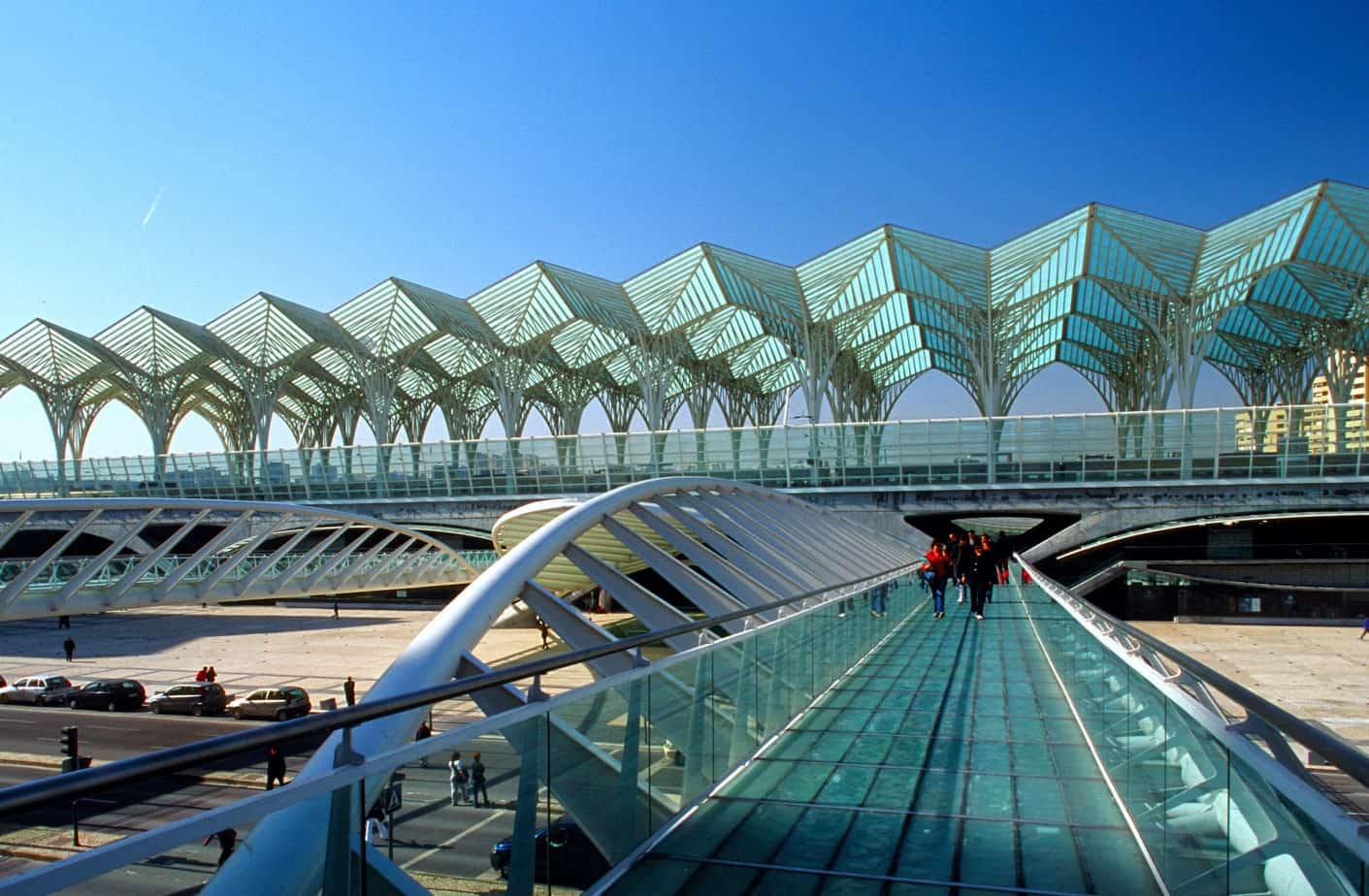
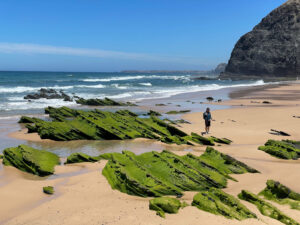
‘Getting off the beaten track’ is an often overused phrase, but it’s entirely apt if you’re hoping to explore the less-visited towns and cities across Portugal. Sometimes your destination is the goal; occasionally it’s a bonus, as it can be more about the journey itself and the evolving landscapes the carriage windows frame so perfectly. With this in mind, we give you our pick of Portugal’s Best Railway Journeys…
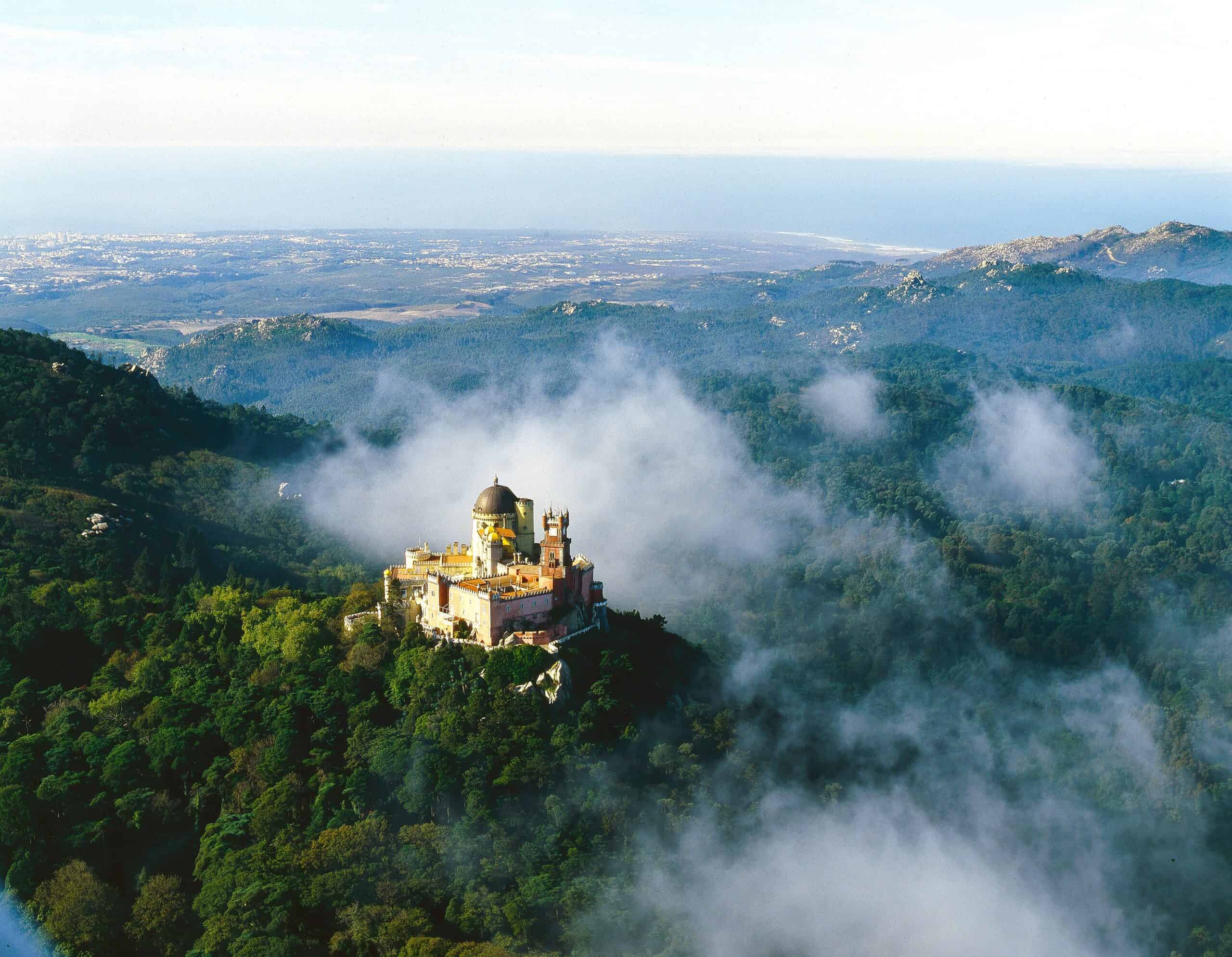
The Linha de Sintra connects the capital Lisbon with the charming hilltop town of Sintra.
The line had quite a sketchy birth: a number of different projects were proposed and cancelled between 1854 and 1887, until the first line was constructed from Alcantara-Terra (just north of the present-day Ponta 25 de Avril) to Sintra. It was quickly extended into the very centre of the in 1889, terminating at the newly constructed Rossio Station. The Estacao de Caminhos de Ferro do Rossio, to give it its full title, was designed by Portuguese architect Jose Luis Monteiro.
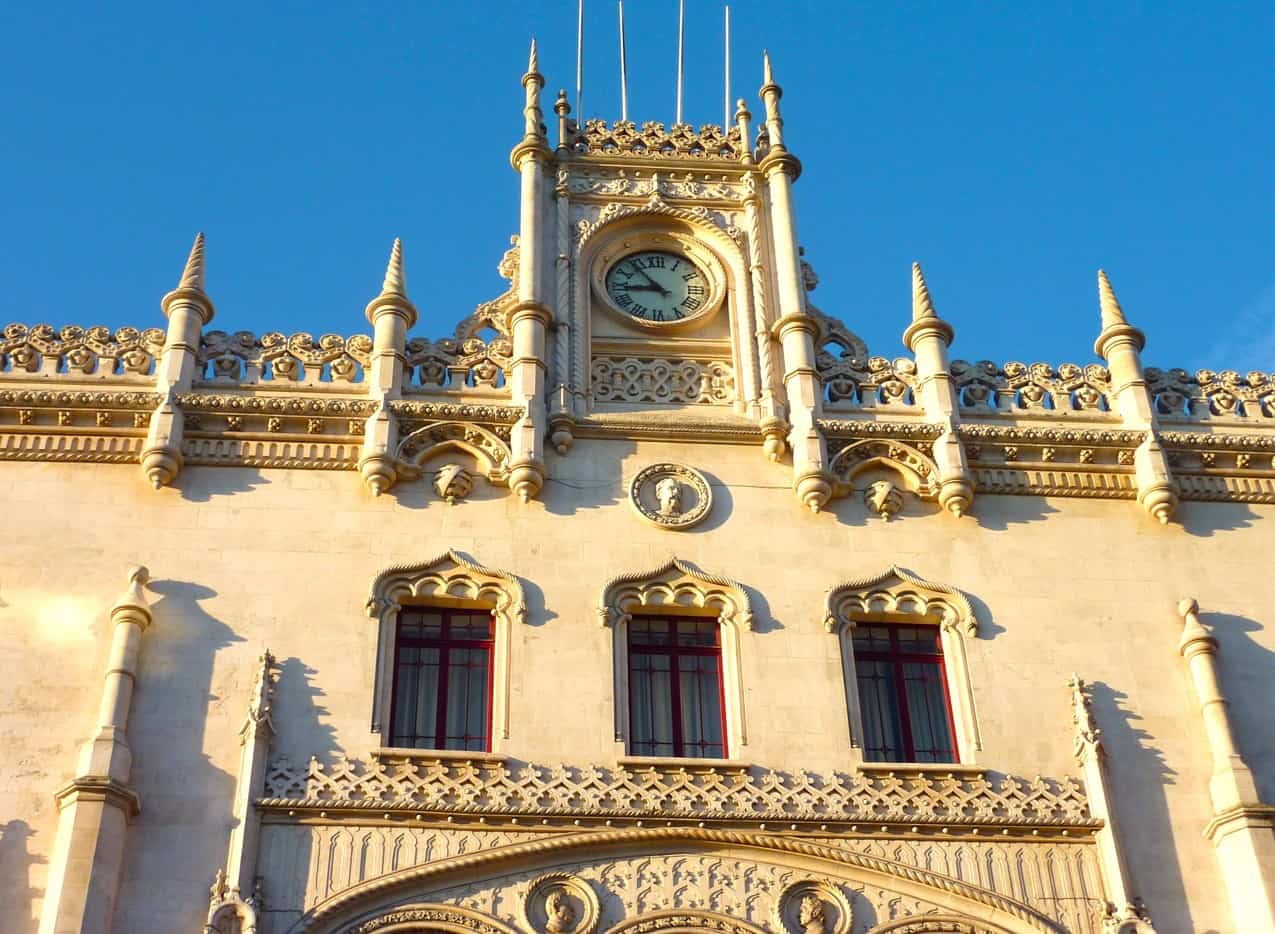
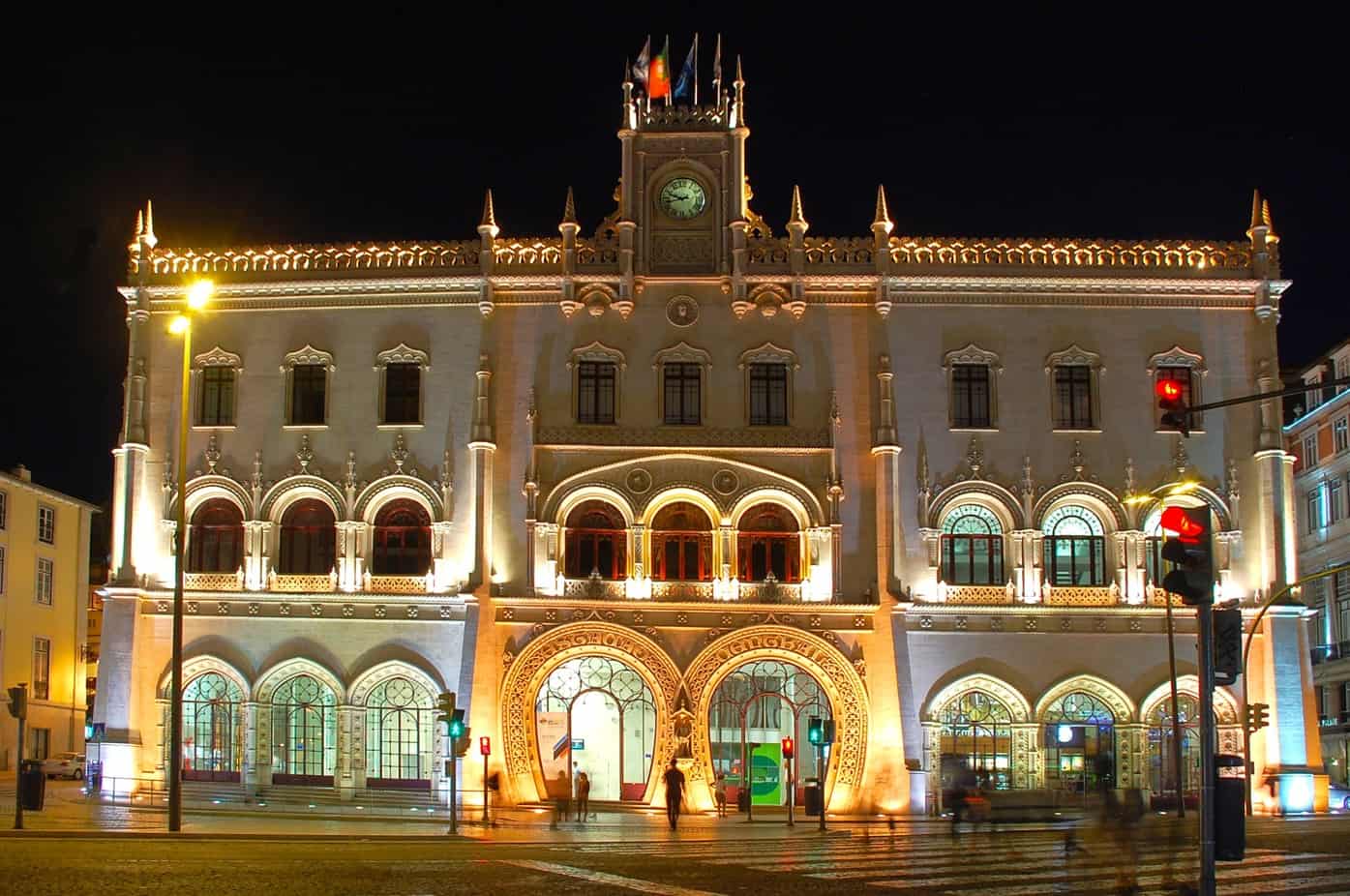 Now considered one of Lisbon’s landmark buildings, Monteiro’s intricately detailed front façade, with its ornate horseshoe entrances harked back to the 16th century Manueline architecture more common to the Belem district. Most of the Manueline buildings in the centre of the city were destroyed in the great earthquake of 1755. Montiero’s father was a stone mason, and Jose was trained to work Estremoz marble from an early age – although the budget for the station could only stretch to limestone. The over-extended arches, which form the entrance to the station, are shaped to match the departure and arrival tunnels which take the line west. Look closely above the right-hand door, and you’ll see a bust presenting ‘Father of the Railways’ George Stephenson – and over the left-hand door, Prime Minister Antonio Maria de Fontes Pereira de Melo who was one of the driving forces behind Portuguese railway expansion in the 1800s.
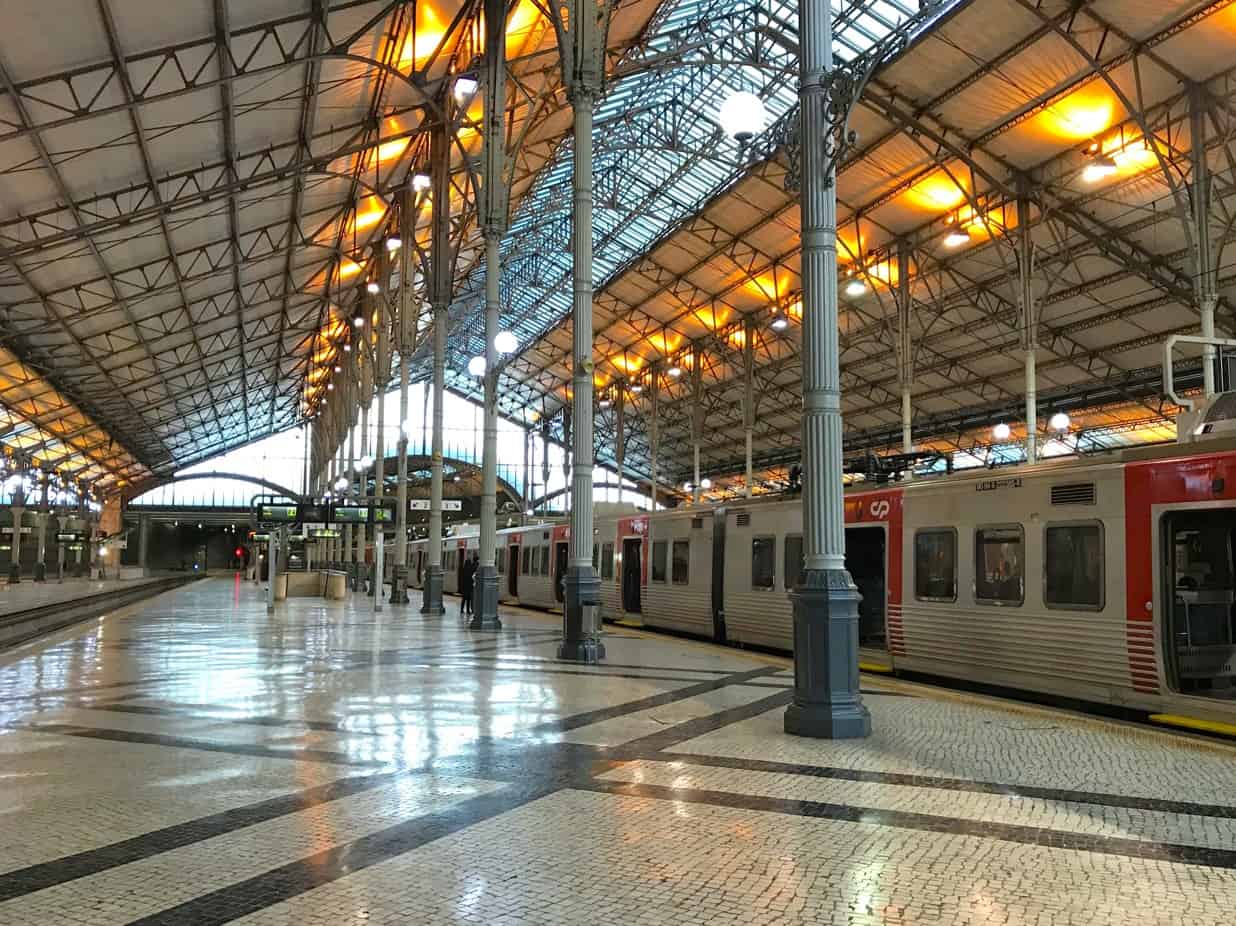
Entering the station on foot, you’ll find the main concourse is actually the lower level – being spread across seven hills, Lisbon is notoriously undulating, and the platforms and trains are on the upper level, two stores up from street level. To bring the lines into the city, engineers carved two 2.6km tunnels, running from Campolide Station to their high-level terminus here at Rossio. The original wrought iron columns and canopy still provide cover over the platforms. You’ll also see a series of decorative mosaic panels lining the outer walls, celebrating the country’s agricultural history. The panels were commissioned in 1940 as part of the Exposicao do Mundo Portugues: the Portuguese World Exhibition which marked the 800th birthday of the nation. The exhibition was held in the Praca do Imperio, close to the Jeronimos Monastery in Belem, and the panels were relocated to Rossio station when the celebrations ended.
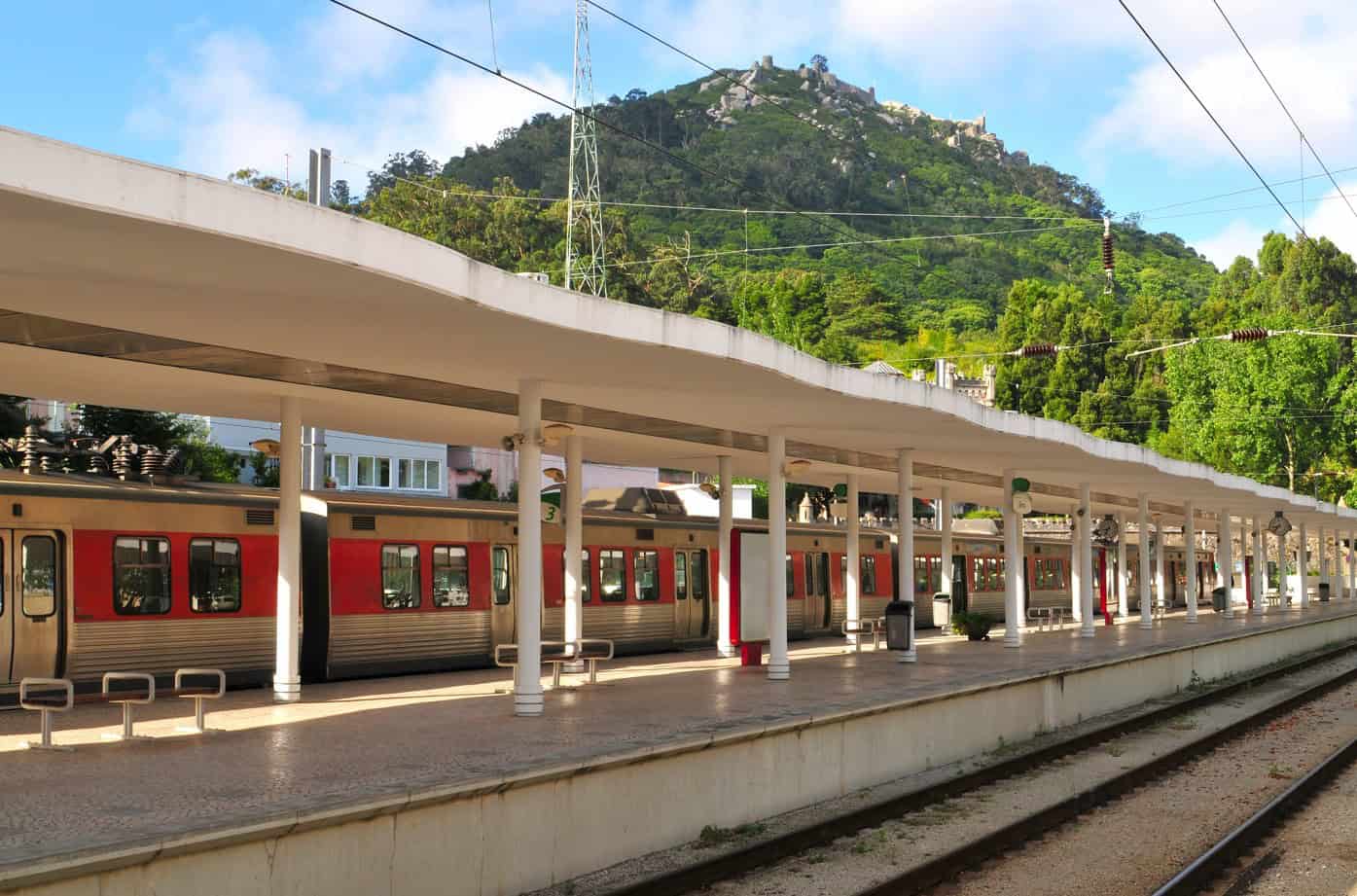
The Linha de Sintra was electrified during the 1950s and the proved to be one of the great success stories of the Portuguese rail network. As the country became better-connected by road and the popularity of the motor car increased, the railways were unfunded and neglected, mothballed, and in many cases, decommissioned. The suburban population to the north and west of Lisbon was growing rapidly, and the Linha de Sintra struggled to keep pace with demand in the late 20th and early 21st century. As a railway journey, the line itself is extremely urban, taking you to the north of Monsanto Park and through the districts of Buraca, Amadora and Massama. Arriving in Sintra can be something of a surprise – just as it’s famous hilltop palace pops into view, the line ducks into an extremely narrow tunnel, before emerging at Sintra station.
 A five/ten-minute walk brings you into the pretty centre of the town. Up until the mid-19th century, Sintra was the favoured summer retreat for Portugal’s royal dynasties, as its elevated location provided a cool escape from the heat of central Lisbon. Its centre is dominated by the Palacio Nacional de Sintra – most of the present-day building was constructed by Dom Joao I in the early 1400s, but each subsequent monarch has made his or her mark. Dom Manuel I added the Sala dos Barsoes (the Room of the Coats of Arms) and the palace’s east wing in the late-1400s. The elaborate decoration and intricate detailing is evidence of the wealth which was flowing into Portugal during that time, particularly in the form of gold from its colony in Brazil. The palace’s final occupant was the queen dowager Maria Pia: widow of Dom Luis I and grandmother to Dom Manuel II, the last king of Portugal. Following revolution of 1910 and the establishment of the 1st Republic, the deposed King was exiled to England and lived out his days in Twickenham – Maria Pia left the palace and chose to return to her native Italy, where she died a year later.
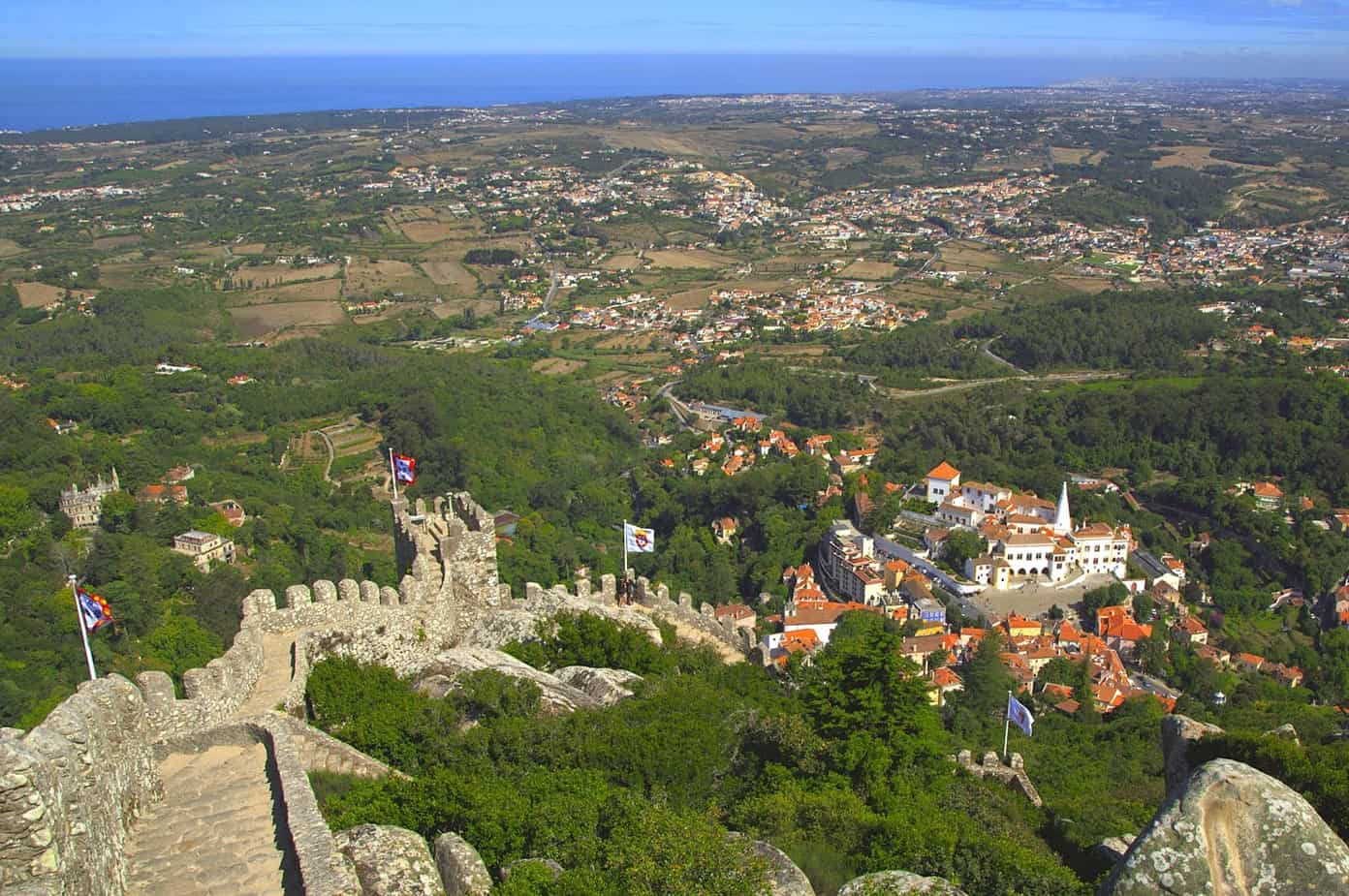 Sintra’s most-popular landmark is the colourful Palacio da Pena was commissioned by Queen Dona Maria II at the tail-end of Romanticism in 1854. Inside and out, it’s an eclectic mix of medieval vaulted arches, byzantine domes, Islamic stuccos, and Manueline gothic windows, columns and arcades. The Pena is famously preserved exactly as it was on 4th October 1910, when Dona Maria Amelia, the last queen of Portugal, stayed for her final night before the 1st Republic abolished the monarchy and the royal family fled to Gibraltar. One of our favourite landmarks is the Castelo dos Mouros – the Moorish stronghold dating back to the 9th century, when the region was under Muslim rule. It fell to the Portuguese shortly after Dom Afonso I’s successful siege of Lisbon in 1147 – Gualdim Pias, a prominent figure in medieval Portugal thanks to his association with the Knights Templar, was granted governorship of a fledging Sintra. As the moors retreated south (and eventually across the Mediterranean), the protection offered by the castle became less important, and the settlement outside the fortified walls expanded quickly as new residents were drawn from across the Tejo floodplains. Sintra was officially granted town status in 1154.
 Due to the popularity of Sintra with daytrippers, Rossio can be an extremely busy station. Wise visitors take an early train in order to avoid the crowds when visiting the palaces – however, as a consequence you could hit the congestion of the station’s morning rush hour. Travel in the afternoon, and services are busy with tourists heading west to visit the Pena Palace. The direct service departs just after the hour and it takes around forty-minutes to complete the journey – there’s also a service just after half-past, which is slightly slower as it involves a connection at Agualva Cacem.
Less well-known (at least to visitors): there’s also a direct service from Lisbon’s Oriente station which takes forty-seven minutes to get to Sintra. It’s much quieter route (after the rush hour), and you can always visit Rossio station on your return journey back into the city. Both services are Urbanos which can’t be prebooked, but if you’d like to take the train during your stay with us in Lisbon, we’ll talk you through the process of purchasing a travel card.