The Details
Take off in your 4WD on this two week Namibia Wildlife and Self-Drive Holiday visiting the country’s main highlights and staying in beautiful guesthouses and desert lodges along the way.
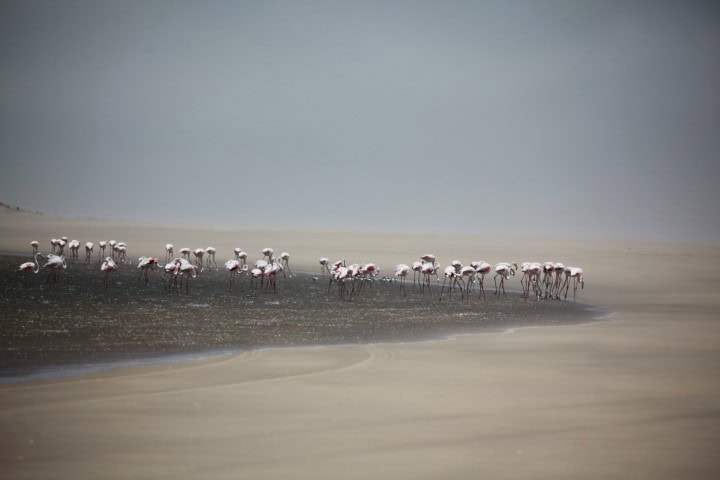
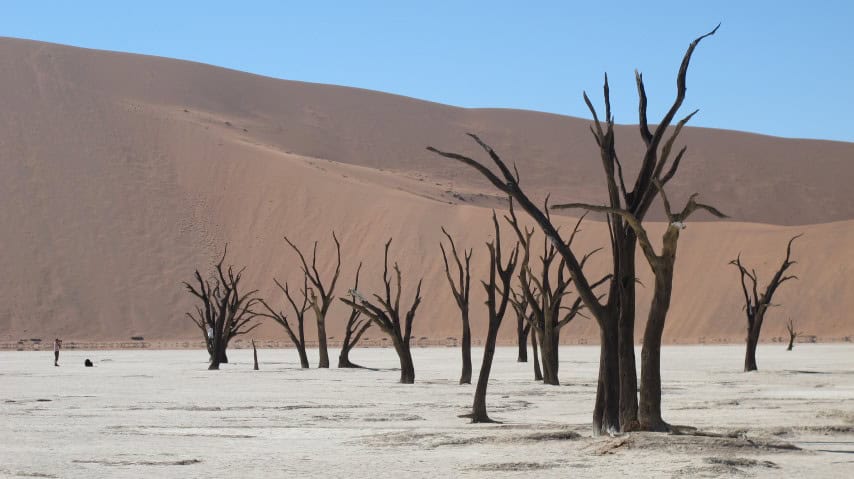
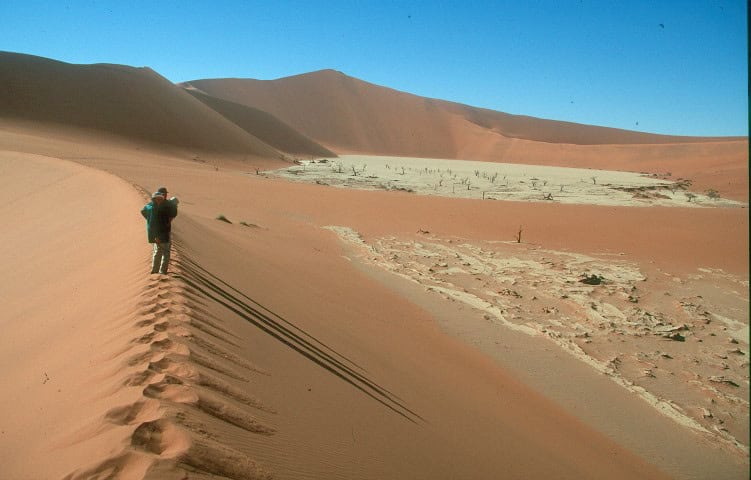
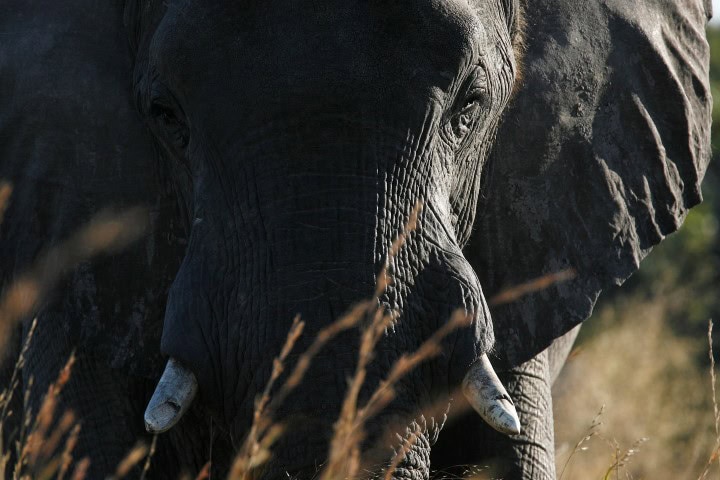
Your journey starts off in Namibia’s capital, Windhoek, with its German architectural influences and European cafe culture before you’re set free to explore the country on your own. And what a country it is – you’ll see thousand foot high dunes at Sossusvlei, spot greater flamingos at Walvis Bay, spend the night on the edge of the enormous Erongo crater, keep an eye out for the rare desert adapeted elephants and of course, drive through the open zoo that exists on Etosha’s vast salt pan.
This Namibia wildlife and self-drive holiday is a perfect introduction to this fascinating, little visited country.
You’ll be staying is comfortable lodges throughout, some will be chalet in style with a few nights in comfortable tended camps.
Best time to go
May through to September tends to be our favourite time to travel to Namibia, although all months offer an incredible experience.
Namibia’s central area is classified as an arid to semi-arid region; arid becoming semi-arid when rainfall exceeds evaporation. The climate is ‘sub-tropical’ desert, characterised by a wide range in temperature between day and night, and between summer and winter.
The Namibian ‘winter’ is from May to September and during these months the skies are clear and there is little rainfall. As the season progresses, daytime temperatures start to drop from an average of 25˚C in April and May to 15˚C during the day, and nights are cold. Between June and August there may be overnight frost in the desert and high areas so take some layers on evening and night game drives. The drier months of June through to October are the best months to see wildlife, particularly in Etosha National Park, as the wildlife use waterholes – which have good access and are easy to watch – more frequently.
The Namibian ‘summer’ is between October and April. Daytime temperatures are high, sometimes reaching over 40˚C in the desert. There is little humidity between October and the end of the year so high temperatures feel pleasant. From late December through to the end of March there tends to be localised afternoon rain showers which do bring humidity. Wildlife is less reliant on the waterholes at this time of year and so less easy to spot, especially as the vegetation also tends to be more green and leafy.
JanFebMarAprMayJunJulAugSepOctNovDec