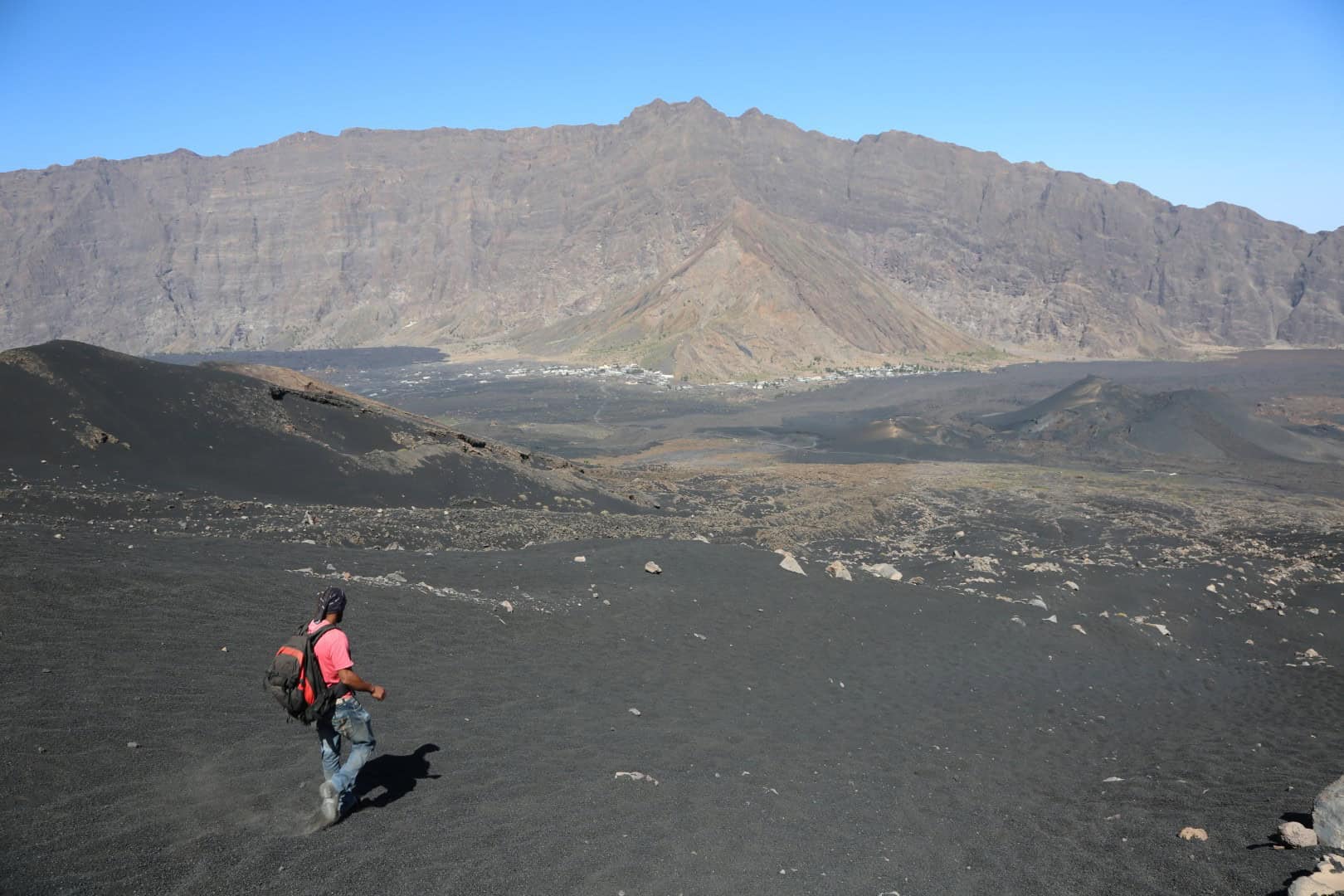
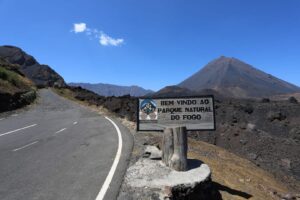
Shortly after 10am on Sunday 23 November 2014, Fogo volcano on Fogo island in Cape Verde started erupting spewing lava from a fissure in the flank of Pico do Fogo (2829m), the highest point on the archipelago.
Around 1000 residents were living in the crater of Cha das Caldeiras, and they felt earthquakes the night before, worsening around 8pm on the Saturday night.
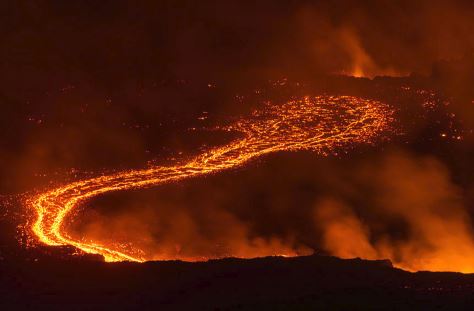
The lava from the volcano flowed towards the village gradually destroying 170 buildings over the 77 days of volcanic activity with all the residents eventually being evacuated despite their initial reluctance. The only road into the crater was also destroyed along with around 2km square of agricultural land. As well as lava flows, there were spectacular explosions, lava fountains and ash emissions — an ash plume from the eruption was visible 90km west at Praia, the capital of Santiago island, and reached 6km in altitude. The eruption from this volcano finally ceased on 8 February 2015.
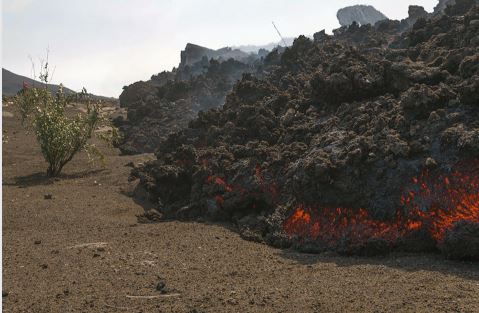
The locals slowly returned to the caldeira and made great efforts to re-build their destroyed houses again. With remarkable resilience and determination they made the most of what the lava had wiped away. Mustafa and Marisa from Casa Marisa for example, chose a different spot and with the help of structural engineers and undeterred that there could be another eruption, built their new home and B&B Casa Marisa II, on the hot lava. The result is a unique B&B with floors so hot, that you can’t walk around on bare feet, but is great for drying your towels and wet clothing on. As the nights in the caldeira can be quite cold, the stone floors provide natural underfloor heating and you will have to sleep with your door and windows open to let the cool breeze in. With virtually no light pollution, it is also the perfect place to watch the amazing starry sky at night from the comfort of your bed.

Another B&B that has made the most of the lava is Casa David, where the owners decided to make a feature of the lava flow. Their dining room nowadays features a lava flow, which looks like a sleeping dragon in the corner. Others, where the lava surrounded their dwellings and only left the top of the roofs untouched, decided to re-build again on top of the roofs.
Since the beginning of 2016 it is possible to climb the volcano, Pico do Fogo again, but only if you’re accompanied by a guide.